
Where searches go wrong
Most search failures are one of four things: the link is dead, the shop is gone, the phrase was translated rather than built, or the result looks right and is not. None of them is exotic and all of them have a fix.
This page is the fix list. It assumes you have read the method and are stuck on something specific rather than starting out.
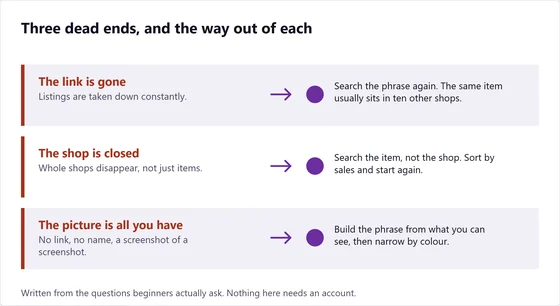
The four common failures
In the order you are likely to meet them.
The link is dead
Listings come down constantly, and a listings page card can outlive the listing it points at by months. This is not a sign that anything is wrong.
The fix is to treat the dead card as a description rather than an address. You have a photograph and a platform. Build the phrase from those and search again. The same item usually sits in a dozen other shops.
The whole shop is gone
Shops close, and when one does, every link into it dies at once. If several links from the same source are dead, this is why.
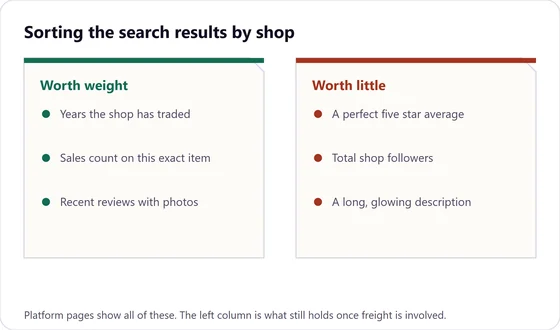
Search for the item rather than the shop, sort by sales volume, and pick a shop with a trading history. Then save the shop, not just the item.
The phrase was translated, not built
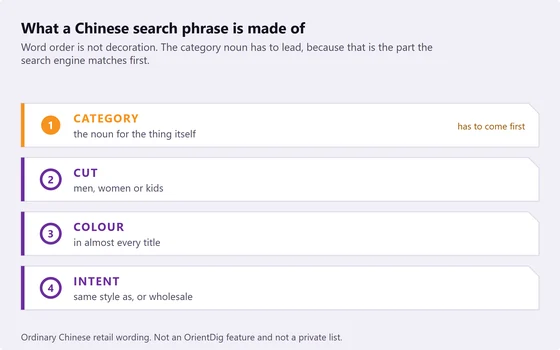
Running an English sentence through a translator produces grammatical Chinese that no seller would ever write in a title. Titles are keyword strings competing for searches, not sentences.
Build the phrase instead: category noun, cut, colour. Then read the titles that come back and search again using their words.
The result is a lookalike
This is the expensive one, because everything downstream works perfectly on the wrong item and you find out when the parcel arrives.
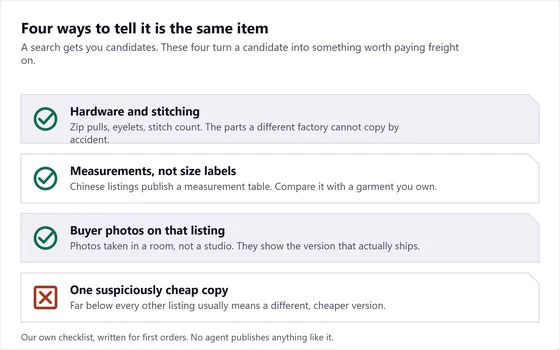
Compare hardware, then measurements, then buyer photographs. If two of those three disagree with your reference picture, it is a different item.
The cheapest listing is usually cheap for a reason
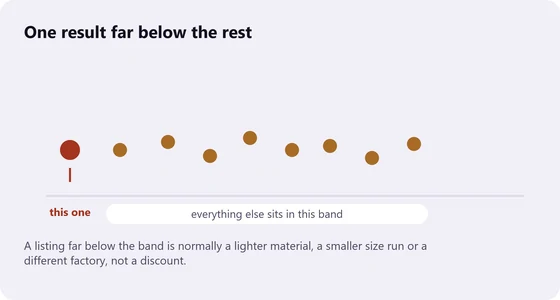
When one copy of an item sits well below all the others, the usual explanation is that it is a different and cheaper version rather than the same thing at a better price. Sometimes the difference is the material. Sometimes it is the hardware. Occasionally it is genuine, and the buyer photographs will show it.
The useful habit is to know the band before you shop. Twenty minutes browsing one category tells you what that category costs, and after that an outlier reads as information rather than luck.
Two mistakes that cost real money
Search mistakes waste an afternoon. These two waste freight, which is worse, because freight is the part you cannot get back.
Ordering several sizes to try
- You pay freight on every one of them.
- Returning from abroad is rarely practical.
- The measurement table exists precisely so you do not have to do this.
- Measure a garment you already own and compare in centimetres.
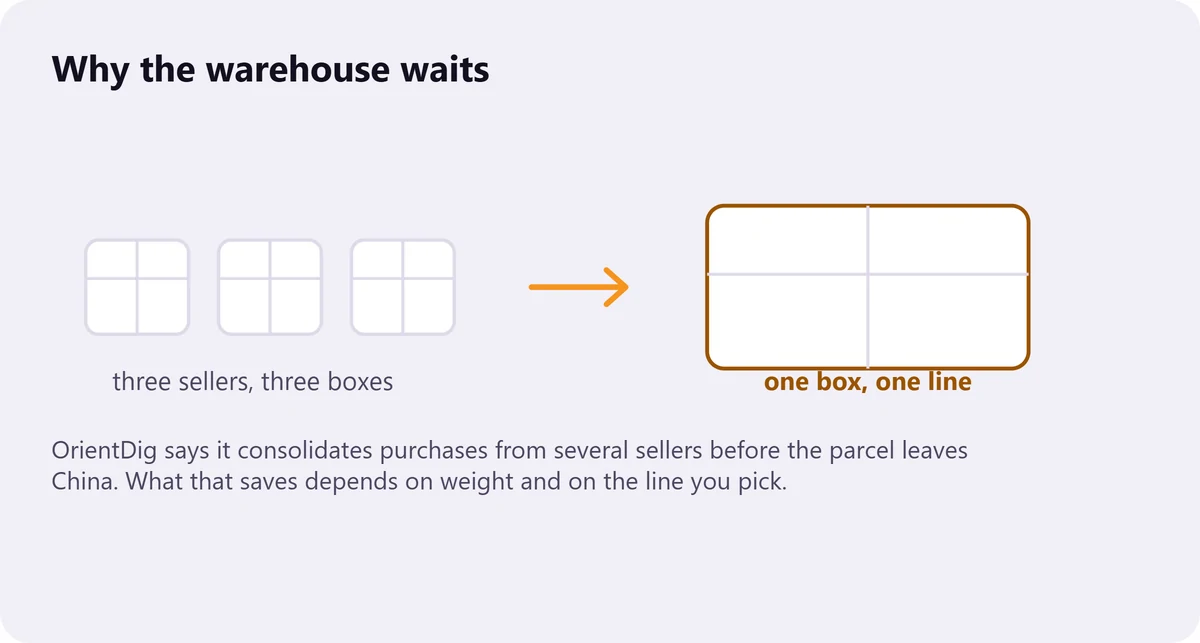
Sending several small parcels separately
- Every parcel carries the same fixed handling cost.
- Four small boxes can cost more than one larger one.
- The warehouse exists to let items wait for each other.
- Decide what ships together before you pay any freight.
Quick reference
Symptom and fix
The short version of this page, for when you are mid-search and do not want to read prose.
| What you are seeing | What it usually means | What to do |
|---|---|---|
| Zero results | Too many words, or English words. | Cut back to the category noun plus one filter. |
| Thousands of results | Only the category noun. | Add a colour. Colour appears in almost every title. |
| Results are the wrong category entirely | The noun you chose maps onto something else. | Find one correct listing and copy its wording. |
| Right item, wrong version | Lookalike listings share photographs. | Compare hardware and the measurement table. |
| Link opens an error page | The listing is gone. | Search the phrase again and pick a shop with history. |
| Everything from one source is dead | The shop closed. | Search the item, sort by sales, save the new shop. |
What this page deliberately does not cover
Whether a particular find is worth ordering is a different question from whether you found the right one, and it depends on the seller, the price band and what you are willing to risk. This guide stops at identification.
Reading warehouse photographs in detail, and the batch and grading vocabulary people use in some categories, are also their own subjects. We mention both where they touch the search and leave the depth to sources that specialise in them.
How to read the QC photos you are sent
Start from what the operator says the photos are for. Appearance and accessories. That is the scope, so the useful question is whether each thing you care about is actually visible in the shots you were given, not whether the item looks nice in them.
Then work through the same four checks you used to confirm the listing, because now you can finally apply them to the real object. Hardware and stitching, the measurement you asked the seller for, the colour against a window rather than a lamp, and the label. A search that ended in the right listing can still end in the wrong production run, and this is where that shows up.
One timing point people miss. The photos happen after the goods reach the warehouse and before you submit the parcel, so this is the last moment the item sits on Chinese soil and a fix costs almost nothing. Any angle you want shot has to be requested while the box is on that shelf. Once the international freight is paid, the cheap options are gone.